Why Dedicated Quarantine Is Your Main Pool Barrier Control
In a serious aquarium, quarantine is not an emergency lane opened after disease appears. It is a routine performance-preservation system, comparable to placing a new swimmer through controlled acclimatization before entering a championship relay. Every incoming fish, invertebrate, plant, piece of live rock, or wet decoration carries uncertainty. A dedicated quarantine tank creates time, physical separation, and a controlled observation environment in which that uncertainty can be measured without exposing the established display.
Shotgun dosing is the aquatic equivalent of changing every component of a training program because one athlete looks fatigued. It may create chemical stress, obscure clinical signs, damage biological filtration, and select for treatment failure without identifying the underlying problem. Systematic observation is more disciplined. Appetite, respiration, posture, fecal output, skin condition, gill movement, behavior, and water quality are recorded in a medication-neutral environment before targeted treatment is considered. That separation protects the mature display ecosystem from silent introductions, including pathogens or parasites carried by apparently healthy arrivals.
Essential Hardware and Equipment Isolation Protocols
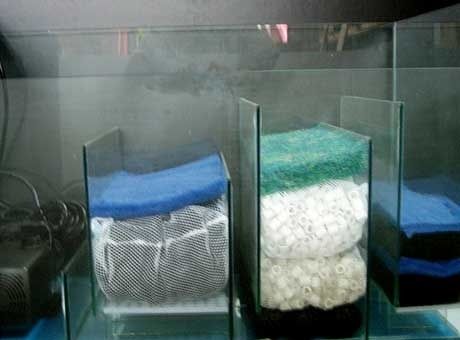
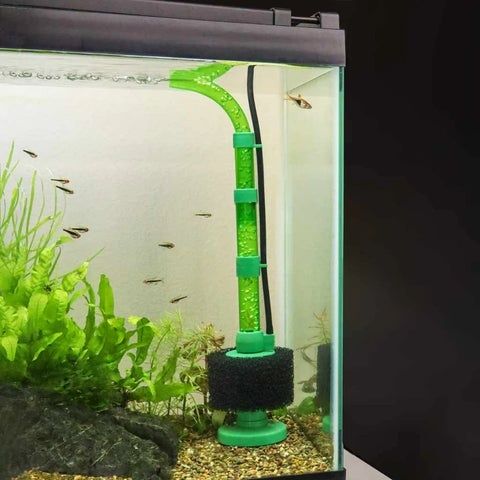
The quarantine tank should be simple enough to clean completely and stable enough to support observation. A bare-bottom glass or inert plastic tank makes feces, shed material, uneaten food, and external parasites easier to see and remove. Use a fitted lid, an appropriately sized reliable heater, a thermometer that has been independently checked, gentle aeration, and a seasoned sponge filter. PVC sections or other inert shelters provide cover without creating porous surfaces that are difficult to disinfect. Avoid gravel, soil, porous ornaments, and permanent biological media that cannot be removed or sterilized efficiently.
A seasoned sponge filter is useful because it supplies established nitrifying bacteria, but its origin must be controlled. A sponge taken from the display can transfer the very organisms quarantine is intended to contain. The safer approach is to maintain spare sponge filters in a separate fish-free reservoir, or to cycle quarantine media using a documented, pathogen-controlled source. Keep the tank isolated from display-tank splash, shared sumps, and common return lines. Site diagrams, written procedures, traceability, and staff responsibilities are also emphasized in aquatic animal quarantine guidance.
Equipment must have lanes just as clearly as a competition pool. Assign nets, siphon hoses, specimen cups, forceps, towels, test kits, and feeding tools to the quarantine system. Color coding prevents a tired or distracted operator from moving a tool into the display by mistake. Handle the healthiest or cleanest systems first and quarantine systems last. Wear task-specific waterproof gloves, cover broken skin, wash hands between systems, and use eye protection where splashing is possible. These precautions matter because fish-associated organisms can move through water, biofilm, surfaces, and instruments, and some, including Mycobacterium marinum, can infect people through damaged skin. Following the FELASA-AALAS aquatic biosecurity recommendations helps ensure that mechanical vectors do not transfer microscopic threats between holding tanks and display ecosystems.
- Remove organic debris before disinfection because proteins and biofilm can shield microorganisms.
- Rinse and dry equipment completely after cleaning, using a disinfectant appropriate to the material and species being kept.
- Observe the disinfectant label for concentration, contact time, ventilation, and rinsing requirements.
- For heat-tolerant equipment, controlled thermal treatment can provide an additional barrier, but avoid damaging nets, seals, plastics, or electrical components.
- Never return quarantine water, filter squeezings, or wet tools to a display system.
Managing Bio-Load and Environmental Stability Under Load
Quarantine is often a bare, unplanted system, so there is little margin for sudden waste production. Fish may arrive stressed, heavily fed before shipment, or carrying damaged tissue that increases metabolic demand. Begin with conservative stocking, strong surface agitation, and frequent testing. Ammonia and nitrite deserve priority, while nitrate, pH, temperature, dissolved oxygen, and salinity or conductivity provide the wider stability picture. Temperature is not merely a comfort setting: fish are poikilothermic, so it influences metabolism, immune activity, and the response to disease.
Pre-seeding a sponge filter can reduce nitrogen instability, but biological maturity should never override pathogen security. If a safe, isolated seed source is unavailable, use a new sponge and manage the initial load with small meals, waste removal, and carefully prepared water changes. Record every intervention. The goal is not to keep numbers within a vague acceptable range, but to identify direction, rate of change, and the fish’s response to that change.
| Parameter | What to track | Operational response |
|---|---|---|
| Temperature | Current value and daily variation | Correct heater or room instability gradually and verify with a second thermometer |
| Ammonia | Presence, concentration, and trend | Reduce feeding, remove waste, increase aeration, and perform a prepared water change when necessary |
| Nitrite | Presence and trend during filter establishment | Increase testing frequency and avoid adding further animals |
| pH and alkalinity | Stability rather than a single reading | Investigate source water, biological demand, and water-change consistency |
| Dissolved oxygen | Measurement where possible, plus surface behavior | Improve gas exchange and check for temperature or organic-load stress |
| Salinity or conductivity | Daily consistency for sensitive species | Match acclimation water carefully and replace evaporated water correctly |
Preventing Biological Invasions and Latent Pathogen Transfer
The most dangerous introduction is not always the visibly diseased fish. It may be a carrier that eats normally while releasing parasite stages, eggs, or contaminated water. A documented case involving Pacific tripletail showed how a single subclinically infected wild fish introduced Neobenedenia and Caligus into a closed system. After approximately one month, fish developed flashing, rubbing, epithelial lesions, and mortality. Juvenile Neobenedenia later demonstrated that eggs had hatched inside the system, creating reinfestation despite an earlier freshwater bath.
This is why quarantine must include the environment, not merely the animal. Incoming macro-organisms, live rock, plants, driftwood, shells, and botanical decor can carry eggs, cysts, snails, larvae, or microbial films. A freshwater bath may be useful for some marine organisms under appropriate species-specific supervision, but it is not a universal clearance procedure. Diagnosis, life-cycle timing, and follow-up observation determine whether a treatment has actually interrupted transmission.
- Inspect all incoming material under strong lighting and, where appropriate, magnification.
- Keep wet packaging water out of the quarantine tank and dispose of it as a contaminated waste stream.
- Use dedicated tubs for rinsing, bathing, sampling, and recovery.
- Remove visible debris and eggs from tank surfaces, shelters, and collection devices at scheduled intervals.
- Disinfect or retire materials between batches, especially after unexplained illness or mortality.
Containment programs for boats provide a useful operational model. The Golden Mussel Prevention Program combines inspection, decontamination, quarantine, and exit checks because standing water and attached debris can transport organisms between otherwise separate water bodies. Aquarium practice should apply the same logic at a smaller scale: wash down equipment, drain all residual water, dry when compatible with the material, and enforce a defined clean interval before reuse. A short visual inspection cannot replace a life-cycle-aware barrier.
The 30-Day Clinical Observation Timetable
Thirty days is a practical observation framework, not a universal guarantee. Species, temperature, life cycle, shipping history, jurisdictional requirements, and suspected pathogens may require a longer period. The record should include photographs, feeding response, behavior, water results, treatments, mortalities, and any diagnostic samples. Fresh samples matter because fish tissues deteriorate quickly, and wet mounts of skin, fins, and gills can be valuable when parasite disease is suspected.
Observation should be active rather than passive. Watch the fish before feeding, during feeding, and after maintenance. Count opercular movements when respiration appears abnormal, note surface gasping or hiding, and compare individuals rather than relying only on a generalized impression. Environmental management commonly comes before medication, while treatment should be selected against an identified or strongly supported problem.
- Days 1 to 7, decompression and baseline control. Keep handling minimal and provide species-appropriate shelter. Establish the fish’s normal respiration rhythm, posture, coloration, swimming pattern, and response to small, digestible meals. Check ammonia and nitrite frequently because shipping stress and sudden waste production can destabilize an unplanted tank. Record external injuries, fin damage, abnormal feces, refusal to eat, and signs of osmotic stress.
- Days 8 to 21, clinical emergence and diagnostic tracking. This is the main inspection lane for delayed signs. Look for flashing, excess mucus, frayed fins, epithelial lesions, clamped fins, weight loss, cloudy eyes, abnormal buoyancy, rapid gill movement, or persistent isolation. Parasites may become more apparent as the fish resumes normal activity. If safe and necessary, an aquatic veterinarian or qualified diagnostician can guide skin, fin, or gill sampling. Do not interpret a single negative test as absolute clearance, especially when pooled samples or intermittent shedding may reduce detection sensitivity.
- Days 22 to 30, conditioning and clearance. Confirm sustained appetite, stable body condition, normal respiration, and consistent behavior through routine disturbances such as feeding and maintenance. Complete any species-appropriate treatment course and respect its required withdrawal, observation, or water-change period. Replace or disinfect quarantine equipment according to the exposure history, then move the fish using clean containers and minimal shared water. Clearance should be a documented decision, not an assumption based solely on the passage of time.
Master Your Deck Protocol to Protect Long-Term Aquatic Health
Quarantine discipline separates reactive problem-solving from sustained aquatic mastery. The strongest system is not the one with the largest medication cabinet, but the one that prevents uncertainty from entering the display unchecked. A clean tank, isolated equipment, reliable records, controlled water quality, and patient observation create a sequence in which each decision is based on evidence rather than alarm.
Shortcuts can save an hour while costing years of ecosystem stability. Maintain a permanent quarantine station, keep spare hardware ready, train every caretaker in the same lane-by-lane workflow, and review the protocol after every unusual event. When quarantine becomes standard operating practice, new arrivals receive a fair acclimatization period and the established display retains the biological stability that advanced aquarists work so hard to build.