
Setting Up Your Blocks Before the Starter Pistol
A new aquarium should never be treated as race-ready simply because the glass is full, the heater is running, and the filter is producing flow. In poolside terms, placing fish into an unconditioned system is the equivalent of sending an athlete into a sprint without developing aerobic capacity, stroke efficiency, or recovery control. The setup may look prepared, but its biological engine is not yet capable of handling the workload. A disciplined new tank syndrome prevention plan gives the filter time to develop the bacterial colonies that process fish waste before livestock is asked to carry the load.
New Tank Syndrome describes the period when an immature biological filter cannot process the ammonia and nitrite produced by fish, food, and decomposing organic matter. The nitrogen cycle is the relay, and it has three biochemical lanes: ammonia must first be converted into nitrite, nitrite must then be converted into nitrate, and nitrate must finally be controlled through water changes, plant uptake, and sensible stocking. The process may take two to eight weeks, and in some systems beneficial bacteria can take considerably longer to establish. The objective is not to force a fixed timetable, but to measure progress until the water proves that the filter is ready.
Lane One Tackling the Initial Surge of Ammonia
The opening leg begins as soon as organic material enters the aquarium. Fish release ammonia primarily through their gills, with additional waste coming from urine and faeces. Uneaten flakes, pellets, frozen food, dead plant material, and other debris also break down into ammonia as microorganisms decompose them. In a mature aquarium, established microbes process this waste continuously. In a new tank, however, the bacterial squad is still assembling, so even a modest first stocking can produce a sharp and dangerous rise.
Ammonia is particularly hazardous because the unionised form, NH3, can pass through delicate gill tissue and interfere with respiration and internal chemistry. Fish may be unable to regulate ammonia leaving their bodies, while damaged gills reduce the efficiency of oxygen and carbon dioxide exchange. Toxicity is influenced by temperature and pH, with warmer, more alkaline water generally containing a greater proportion of the more dangerous unionised form. Because ammonia is colourless and odourless, clear water is not evidence of safety. A reliable liquid test kit is more valuable than visual inspection.
The first bacterial relay is commonly associated with Nitrosomonas. These ammonia-oxidising bacteria use ammonia as an energy source and produce nitrite as a by-product. The colony does not appear at full strength on the day a filter is switched on. It needs an oxygenated surface, a steady food source, suitable water chemistry, and time to reproduce. Any measurable ammonia in a stocked aquarium should be treated as a warning rather than a tolerable background figure. If ammonia is detected, stop feeding, check the test result with a fresh kit, improve aeration, and carry out a substantial partial water change. A 25 to 50 percent change is a common emergency response, although the needs of the livestock and the severity of the reading must guide the decision.
- Target ammonia in a stocked aquarium is 0 ppm.
- Use a dechlorinator that neutralises chlorine and chloramine before water reaches the filter and fish.
- Keep feeding deliberately light during the early cycle, removing food that remains uneaten.
- Check pH and temperature because both affect the toxicity of ammonia.
- Do not interpret a bacterial starter as proof that the tank is cycled. Confirm performance with repeated test results.
Lane Two Navigating the Invisible Nitrite Wall
Once ammonia begins to fall, the relay has not finished. The next hazard is nitrite, which often creates the most deceptive stage of a new aquarium. The water may look bright and the ammonia test may appear improved, yet nitrite can be accumulating faster than the second bacterial colony can process it. This is the biological equivalent of a swimmer reaching the cardiovascular wall halfway through a race. The system appears to be moving forward, but the next conversion lane is overloaded.
Nitrite is toxic because it interferes with the blood”s ability to transport oxygen. Fish exposed to elevated nitrite may gasp at the surface, breathe rapidly, become lethargic, lose appetite, or congregate near filter outlets where oxygen exchange is strongest. Brownish gill tissue, sometimes described as brown blood disease or gill brownout, is a serious warning sign. These symptoms require immediate action, not a wait-and-see approach. The technical guidance on aquarium ammonia also highlights how quickly poor water quality can weaken fish and increase susceptibility to disease.
The second relay is often associated with Nitrobacter and related nitrite-oxidising bacteria. These organisms convert nitrite into nitrate, which is considerably less acutely toxic at ordinary aquarium concentrations. Their development may lag behind the first ammonia-consuming colony, creating the familiar mid-cycle spike. Water changes dilute nitrite and protect livestock, but they do not remove the bacteria living mainly on filter media. A carefully managed change therefore supports the race rather than resetting it. Avoid replacing all biological media, washing it under chlorinated tap water, or using medications that damage the colony unless there is a specific veterinary reason.
- Target nitrite in a stocked aquarium is 0 ppm.
- If nitrite is detectable, increase testing frequency and consider a partial water change.
- Add extra aeration because nitrifying bacteria and stressed fish both require strong oxygen availability.
- Pause or sharply reduce feeding until the reading returns to zero.
- Stock slowly. A new group of fish can create a second spike even after the first cycle appears complete.
Biochemical Splits Tracking the Nitrogen Relay Stages
Each nitrogen compound represents a different split in the race, with its own risk profile and management priority. Ammonia and nitrite are the active hazards. Nitrate is the finishing product that signals the relay is functioning, but it still accumulates and must be managed. A tank is commonly considered cycled when ammonia and nitrite remain at zero and nitrate is present at a controlled level, often below 30 ppm according to practical aquarium guidance. Exact limits depend on species, plants, water chemistry, and the reliability of the test method.
| Stage | Main source or converter | Risk profile | Poolside intervention |
|---|---|---|---|
| Ammonia | Fish gills, urine, faeces, and decomposing food | Highly toxic, especially as unionised NH3 | Stop feeding, test pH and temperature, improve aeration, and perform a partial water change |
| Nitrite | Produced when ammonia is oxidised by Nitrosomonas | Interferes with oxygen transport and can cause rapid distress | Dilute with a partial water change, maintain oxygenation, and protect biological media |
| Nitrate | Produced when nitrite is oxidised by Nitrobacter and related bacteria | Less acutely toxic, but chronic elevation stresses fish and encourages algae | Use regular partial changes, moderate feeding, plant growth, and controlled stocking |
The Conditioning Protocol for a Resilient Biofilter
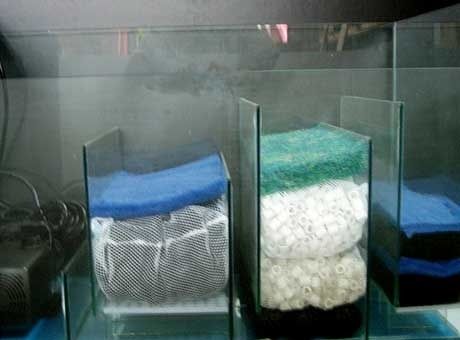
The most controlled method for a new aquarium is a fishless cycle using a measured synthetic ammonia source. This approach supplies the bacterial colony with fuel without exposing fish to the toxic training environment. Begin by setting up the tank fully, including substrate, hardscape, plants, heater, filter, and aeration. Treat the water with a conditioner that removes chlorine and chloramine, then run the equipment continuously. The filter should have ample oxygenated media because nitrifying bacteria colonise surfaces rather than floating freely in the water.
Add a known amount of aquarium-safe ammonia according to the product instructions and test after the dose has dispersed. Avoid guessing with household ammonia, which may contain fragrances, surfactants, or other additives. Test ammonia, nitrite, nitrate, pH, and temperature every 48 hours. The purpose is to chart the curve: ammonia rises, then begins to fall as the first colony develops; nitrite rises afterward, then falls as the second colony becomes established. The tank is ready only when a controlled ammonia dose can be processed to zero ammonia and zero nitrite within an appropriate period, with nitrate accumulating as expected. Advice from Aquacadabra”s cycling guide similarly stresses testing, patience, and gradual loading rather than relying on a calendar alone.
- Prepare and dechlorinate the aquarium, then run filtration, heating, and aeration continuously.
- Introduce a measured ammonia dose and record the date, quantity, pH, temperature, ammonia, nitrite, and nitrate.
- Repeat testing every 48 hours and avoid adding more ammonia until the previous dose has been processed or the instructions for the chosen method require it.
- When ammonia and nitrite repeatedly return to zero, verify the filter with a measured test dose rather than immediately adding a full community.
- Perform a large partial water change to reduce accumulated nitrate before introducing the first fish.
- Add a small initial group, feed sparingly, and test daily or every other day for the first week after stocking.
Stocking is a new training block, not a finish-line celebration. Even a tank that has completed a fishless cycle can struggle when the biological workload changes suddenly. Add compatible fish in stages, leaving time for the bacterial population to expand. Quarantine new livestock where possible, because disease prevention and nitrogen management are separate parts of responsible fishkeeping. Live plants can absorb some nitrogen compounds and offer additional biological surface area, but they do not replace testing or a properly sized filter.
Maintenance should protect the biofilter while removing waste from the system. Rinse mechanical sponges and other trapped-waste media in water removed during a partial change, never under untreated tap water. Replace media only when it is physically failing, and never discard all established media at once. Keep filter flow, surface agitation, temperature, and oxygen levels stable. Treat every major clean, prolonged power cut, medication course, or sudden increase in stocking as a possible interruption to the training programme.
Bring Your Aquatic System to Peak Form
A stable aquarium is built through biological conditioning, not shortcut chemical cures. Bottled bacteria may assist in some circumstances, but only measured ammonia, nitrite, and nitrate results demonstrate that the filter is carrying its workload. The disciplined route is straightforward: establish the equipment, provide a controlled ammonia source, track the relay, correct deviations promptly, and increase the fish load in manageable blocks.
The first six weeks can feel slow, particularly when an empty aquarium is already visually complete. That patience pays dividends in clearer water, healthier gills, fewer disease outbreaks, and a system capable of recovering from ordinary feeding and maintenance errors. Before the first active swimmers enter the tank, run this coach”s checklist:
- Ammonia is consistently 0 ppm.
- Nitrite is consistently 0 ppm.
- Nitrate is measurable but controlled through a planned water change.
- pH and temperature are stable and suitable for the intended species.
- Filtration and aeration have operated continuously.
- The first stocking group is modest, compatible, and supported by a feeding plan.
- Fresh test kits, dechlorinator, and water-change equipment are ready at poolside.